AI's Dirty Secret: The Cooling Problem Nobody Talks About
The artificial intelligence boom is reshaping industries, rewriting software, and minting new billion-dollar companies at a dizzying pace. But behind every AI inference, every model training run, and every GPU cluster sits a far less glamorous reality: enormous amounts of heat that need to go somewhere.
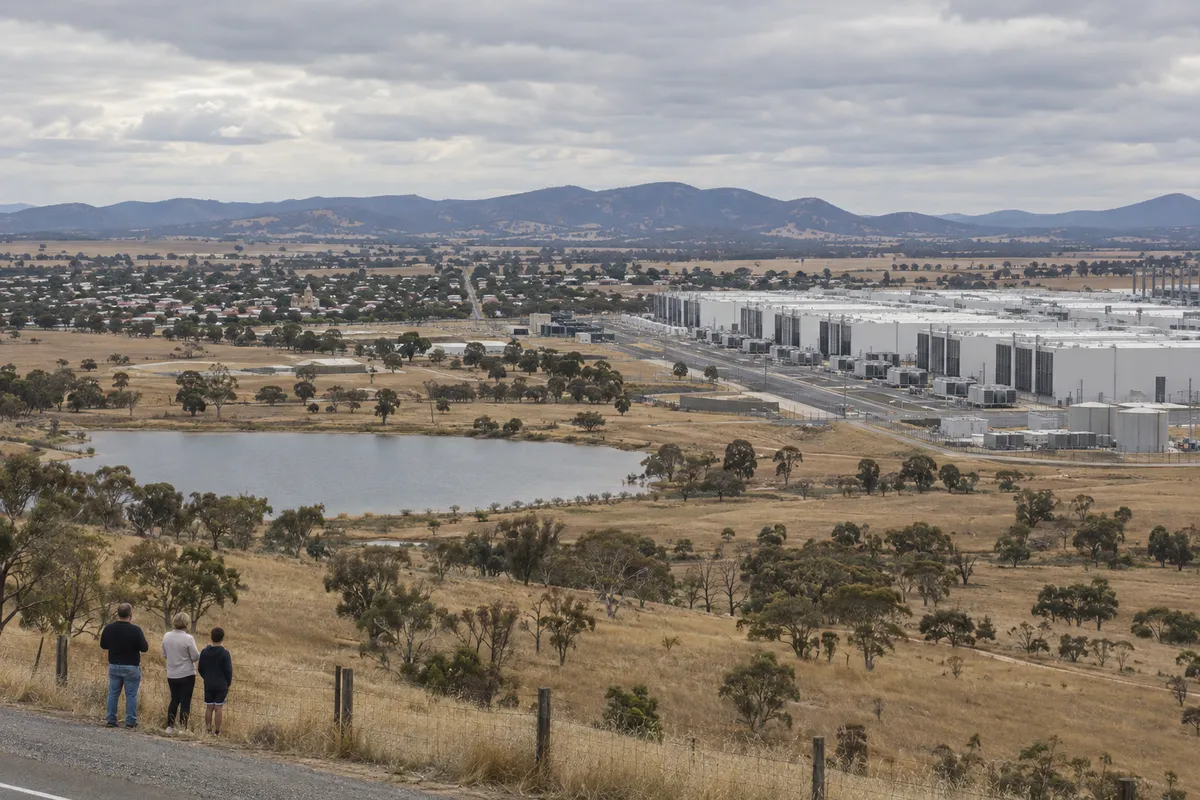
Cooling infrastructure has quietly become one of the most pressing bottlenecks in the AI buildout. Data centers are projected to account for anywhere from 9% to 17% of total electricity usage in the U.S., according to reports, with cooling systems consuming a major share of that power — not to mention the staggering volumes of water required to keep servers from melting down.
Now, an MIT-born startup called Ferveret thinks it has a solution borrowed from one of the most extreme engineering environments on Earth: the nuclear reactor.
Borrowing From Nuclear Science
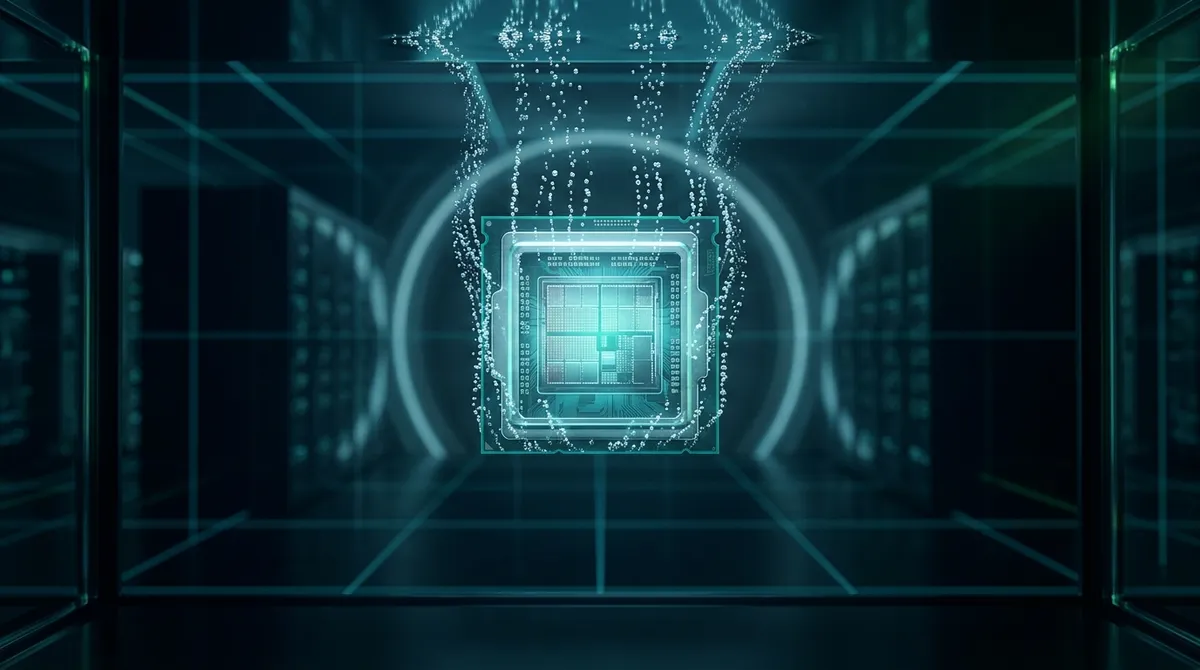
Ferveret's core technology, dubbed Adaptive Phase Cooling, applies heat-transfer principles originally developed for nuclear reactor cooling to the problem of keeping AI chips running at peak performance. The approach centers on liquid immersion cooling — submerging servers directly in a liquid coolant rather than blasting them with air or relying on water-intensive cooling towers.
What makes Ferveret's system distinct isn't just that it uses liquid immersion; it's how it manages the boiling process at the chip surface. According to reports, the system produces smaller, faster-detaching bubbles during heat transfer. That might sound like a minor technical nuance, but in thermodynamics, bubble behavior is everything. Smaller bubbles that detach more quickly carry heat away from a surface more efficiently, improving overall heat transfer performance without wasting energy in the process.
The result, the company claims, is a water-free cooling system capable of boosting compute efficiency and reducing energy waste — a combination that is increasingly valuable as AI chips run hotter and data center operators face tightening power constraints.
Why Water-Free Cooling Is a Big Deal
Traditional data center cooling is thirsty work. Evaporative cooling systems — a common approach at hyperscale facilities — can consume millions of gallons of water annually at a single campus. As data centers increasingly seek locations near renewable energy sources, many of which are in arid or water-stressed regions, water dependency becomes a genuine infrastructure liability.
A water-free immersion cooling system sidesteps that constraint entirely. For operators looking to site renewable-powered AI infrastructure in locations where water is scarce, that's not just an environmental talking point — it's a practical competitive advantage.
The sustainability pressure on data center operators is also intensifying from multiple directions. Regulators, investors, and corporate sustainability commitments are all pushing operators to reduce their environmental footprint, even as AI demand is driving the fastest infrastructure buildout the industry has ever seen. More efficient cooling directly translates to lower power consumption per unit of compute, which matters both for operating costs and carbon accounting.
The Race for Compute Efficiency
Beyond water and energy savings, there's another driver pushing operators toward next-generation cooling: the relentless pursuit of more AI tokens per watt.
Modern AI accelerators — the GPUs and custom silicon that power large language models and other AI workloads — generate extraordinary amounts of heat. As chip designers push thermal design power envelopes higher to deliver more compute performance, the cooling system becomes a critical limiting factor. A chip that could theoretically run faster is often thermally throttled because conventional air or liquid cooling can't keep pace.
Liquid immersion systems, particularly those engineered around improved heat-transfer dynamics like Ferveret's bubble-based approach, offer a path to squeezing more performance from the same hardware. In a world where AI compute is a scarce and expensive resource, that efficiency gain has real economic value.
From Nuclear Reactors to Server Racks
The conceptual leap from nuclear reactor cooling to data center infrastructure is less surprising than it might seem. Nuclear engineering has long demanded solutions to the problem of removing enormous amounts of heat from dense, confined spaces with extreme reliability and minimal resource waste. Those are precisely the same design constraints now facing AI data center architects.
Ferveret's technology represents a growing trend of cross-domain innovation in the data center space, where operators are increasingly looking beyond traditional IT cooling vendors to fields like aerospace, industrial chemistry, and — apparently — nuclear physics.
What Comes Next
The data center cooling market is crowded and evolving fast, with established players and a wave of startups all competing to define what next-generation infrastructure looks like. Ferveret is positioning itself at the intersection of two powerful forces: the AI compute buildout and the sustainability imperative.
Whether Adaptive Phase Cooling can scale from engineering concept to widespread deployment remains to be seen. But the underlying logic is hard to argue with. As AI workloads grow denser, chips run hotter, and water and power constraints tighten, the data center industry needs better ideas about cooling — and looking to nuclear science for inspiration might be one of the smarter bets on the table.