
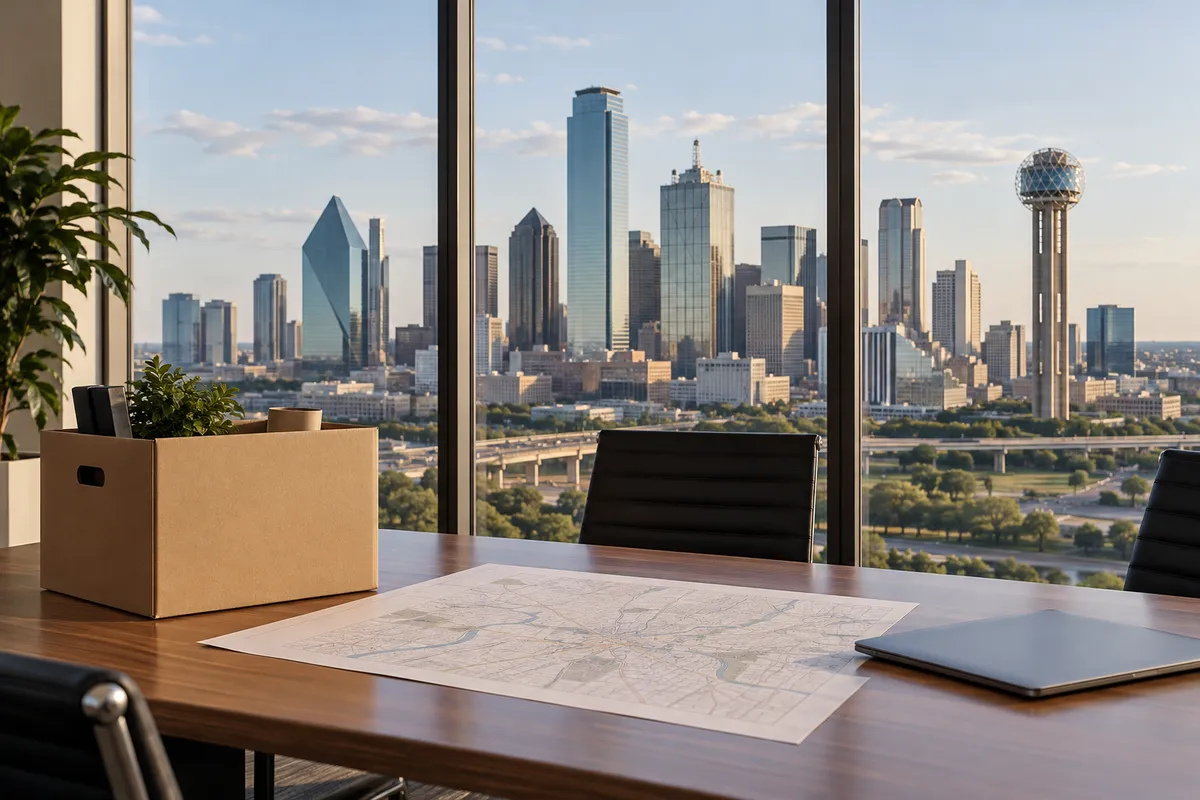
Dallas Mayor Eric Johnson has a short answer for why major businesses keep relocating to Texas: the city embraces business and competition. He made the case on "The Will Cain Show," per Fox News. If you run a company, work for one, or are deciding where to build one, the useful part isn't the slogan. It's knowing how to test a city's pitch against your own situation. This piece gives you a way to do that.
What Johnson is actually arguing
According to Fox News, Johnson's position is that Dallas draws major employers because it has a pro-growth environment and welcomes competition rather than treating business as a problem to manage. Dallas, in his telling, is positioning itself as a business-friendly alternative to higher-cost, more regulated markets.
That's the mayor's framing, and it's worth remembering who is speaking. A mayor is the city's lead salesperson. That doesn't make the claim wrong, but it means you should treat it as a pitch to verify, not a neutral finding.
Why this stays a live debate
Corporate relocations to Texas remain a major economic and political talking point, as cities compete for jobs, investment, and influence. Every move gets read as a verdict on one place versus another, which is why the conversation gets heated fast. Our take: the loudest arguments tend to treat a company's move as proof of a whole philosophy, when a single relocation usually reflects a mix of reasons specific to that firm.
How to test a "business-friendly" pitch
When any city says it's good for business, ask the same few questions. None of these require taking a side.
1. What does it cost you, in total?
The pitch against higher-cost markets is about cost. Don't stop at a headline tax rate. Add up office or lease costs, payroll, housing costs for the people you'll hire, and what a relocation itself costs you. Put those numbers next to your current location.
2. How much friction is there?
"Regulated" versus "pro-growth" is really a question about time and predictability. How long do permits, licensing and approvals take for a business like yours? Ask companies already operating there, not just the city's economic development office.
3. Can you hire the people you need?
A friendly environment means little if your key roles are hard to fill. Check whether the local talent pool matches your needs, and whether your current employees would actually move.
4. What happens to the surrounding community?
Relocations affect workers, housing and local politics. More jobs can mean more demand for homes and services, and that cuts both ways for residents and for your own staff. Look at how the city is handling growth before you commit, because the conditions that attract you will shape your employees' daily lives.
The politics are part of the package
"Business-friendly" is a political label as much as an economic one. Rival cities and states dispute it, arguing about what they offer in return for higher costs. As a decision-maker, you don't have to settle that argument. You need to know which parts of each city's approach touch your business: taxes, rules, workforce, quality of life for the people you employ.
What this means for different readers
Executives and founders: Build a side-by-side comparison of your current city and any candidate, using real quotes and real payroll data. Treat the mayor's pitch as a starting point for questions.
Small business owners: Big-company moves can change your local market. A wave of new employers can mean more customers and more competition for workers and space at once.
Employees: If your employer is eyeing a move, ask early about relocation support, timing and what changes in your role.
The takeaway
Johnson's message is that Dallas wants business and wants competition. Before you let any city's pitch, Dallas included, shape a decision, turn it into a checklist of costs, friction, talent and community impact, and fill it in with your own numbers.