
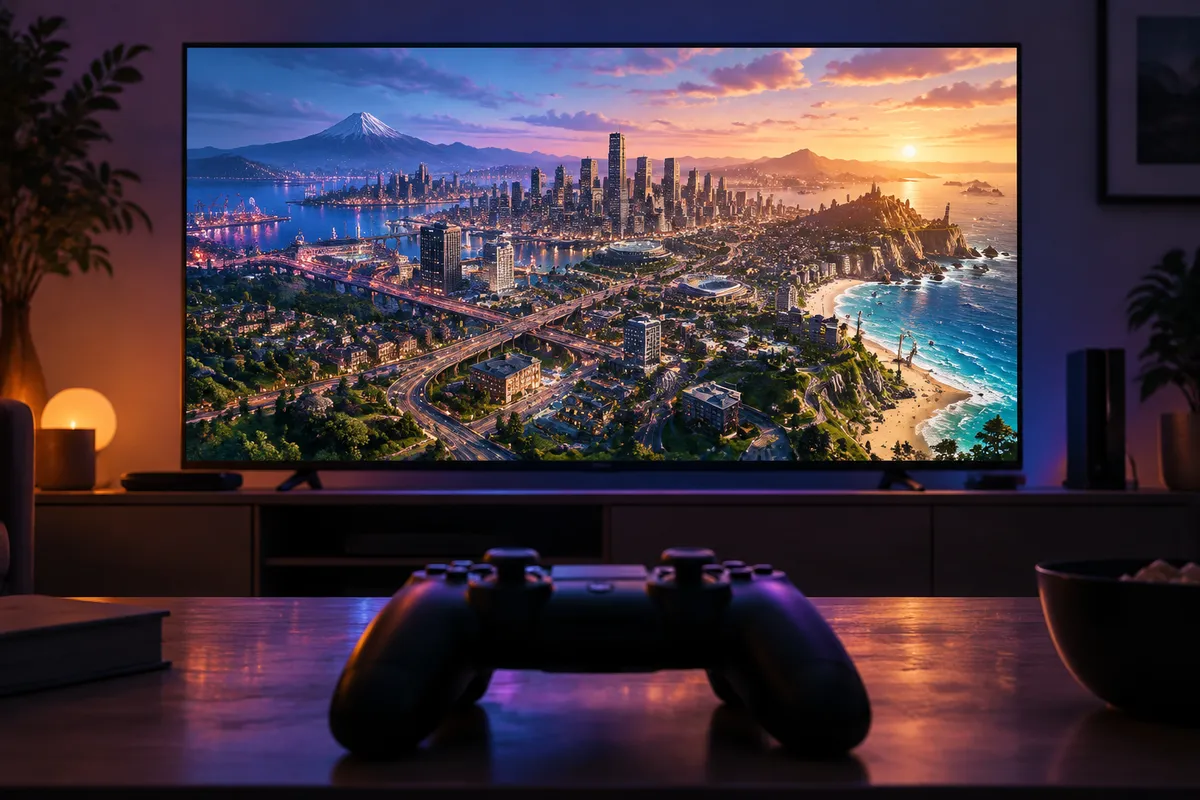
Picture telling your computer, "Build me a GTA," and getting a city shaped around your tastes. That is the idea behind a vision from Nikita Bier, as reported by Benzinga. By the end of this piece, you'll have a clear way to think about what that idea means for players, indie developers, and the big studios that currently dominate blockbuster games.
One caveat first. What Benzinga describes is a vision and an argument, not a finished product. Nothing here says such a tool exists today. What it does give us is a useful lens on where game economics may be heading.
The Idea: A GTA-Like World Made Just for You
Per Benzinga, Bier envisions a personalized, AI-built world in the spirit of Grand Theft Auto. Instead of one shared game that millions of people play the same way, you would get an experience generated around your preferences.
That flips the usual model. Today, a studio decides what the world looks like, and players adapt. In the scenario Bier sketches, you describe what you want and the software does the building.
Why Studios Are Nervous
Benzinga's argument is that new AI models could threaten traditional game studios by cutting production costs and intensifying competition. Those two pressures feed each other.
Blockbuster-scale games have long been protected by how expensive they are to make. Big budgets act as a moat: few teams can afford to build something on the scale of a GTA. If AI lowers the cost of producing that kind of experience, the moat gets shallower. More competitors can enter, and the advantage of simply being able to afford the work shrinks.
What changes when costs fall
This is my analysis, not a claim from the report, but the logic follows from it:
- Scale stops being the main advantage. If anyone can produce a large world, studios have to win on something else: taste, story, polish, community.
- Competition gets louder. More games means more fighting for the same attention and the same hours of play.
- Production budgets get questioned. If a similar-feeling world can be generated cheaply, the case for spending enormous sums gets harder to make.
Who May Benefit: Indie Creators
One angle worth considering is that small developers could gain the most. Lower costs matter most to the people who were priced out to begin with. A solo creator or small team that could never staff a large production might be able to attempt something ambitious.
That is speculation on my part, and the cost savings would have to be real. But the pattern is familiar in technology: when a tool makes a once-expensive task cheap, the biggest relative jump often goes to the smallest players.
What It Means for Players
If worlds can be generated to order, players could get games tailored to them rather than games built for an average audience. That sounds appealing, but it raises open questions the report's premise doesn't answer:
- If every player's world is different, what do you talk about with friends?
- Does a personalized game still feel authored, or does it feel generic?
- Who decides what quality looks like when anyone can make something?
These are worth keeping in mind as hype builds. Personalization is a feature, but shared experience is part of why games like GTA became cultural touchstones.
How to Think About It Practically
You don't need to predict the outcome to make good use of the idea. A few ways to apply it:
- If you play: Pay attention to what you value most, whether that is scale, story, or novelty. That tells you whether personalized worlds would appeal to you.
- If you build: Treat cost reduction as an opening. Ideas, design sense, and distinct voice become more valuable when raw production gets cheaper.
- If you work at or invest in a studio: Ask what your advantage would be if budget stopped being a barrier.
The Bottom Line
Benzinga's framing of Bier's vision is a speculative one, but the economic question underneath it is real: when generative AI lowers what it costs to make big games, what is left that is hard to copy? Start asking that now, whichever side of the screen you're on. The answer will separate the studios, and the players, who adapt from those who simply wait.