Revolutionary Mirror Technology Passes Final Tests
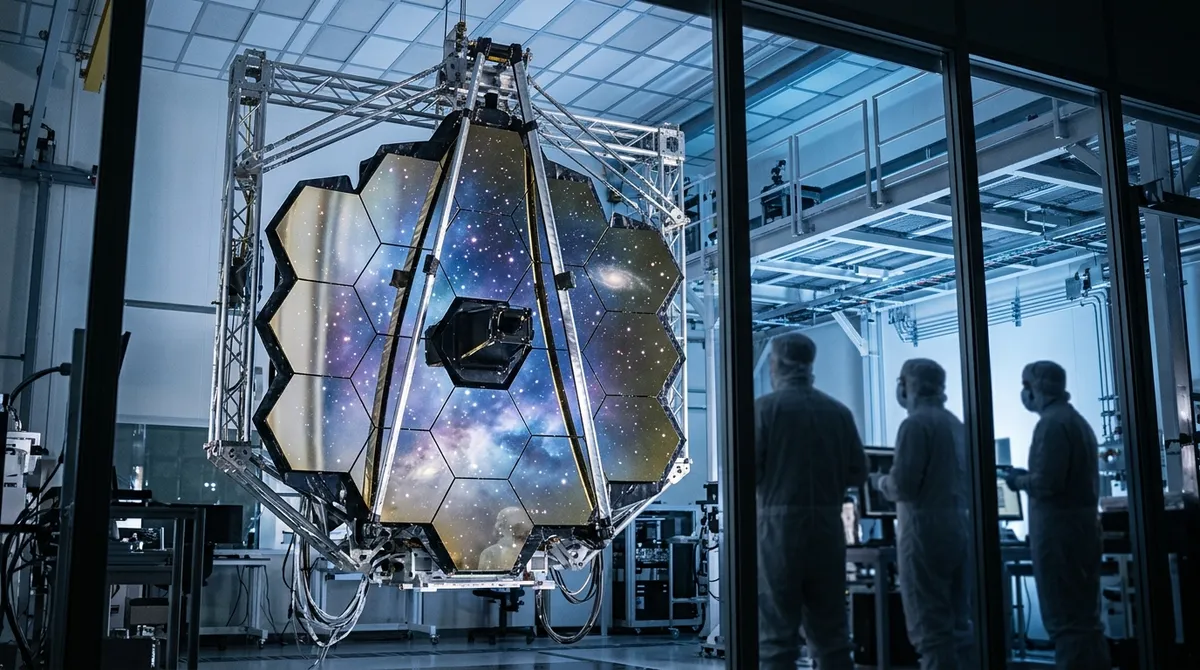
NASA has reached a critical milestone in space exploration with the completion of final inspection of the Roman Space Telescope's primary mirror. According to reports, this 2.4-meter infrared instrument features an ultra-thin silver coating that will enable groundbreaking observations of the universe.
The mirror represents an engineering marvel, with its silver coating described as hundreds of times thinner than human hair. This extreme precision engineering demonstrates the level of technological sophistication required for next-generation space telescopes.
Advancing Space-Based Astronomy
The Roman Space Telescope represents a major leap forward in space-based astronomy and is nearing launch readiness. This milestone marks a significant step toward what experts describe as a transformative new era of cosmic discovery.
The telescope's infrared capabilities are designed to complement existing space observatories like the James Webb Space Telescope, offering unique perspectives on cosmic phenomena that visible light observations cannot provide.
Unlocking Cosmic Mysteries
According to reports, Roman is specifically designed to tackle some of the universe's most pressing mysteries. The telescope will focus on three key areas of research:
Dark Energy Investigation: The telescope will probe the mysterious force driving the universe's accelerating expansion, potentially revolutionizing our understanding of cosmic evolution.
Exoplanet Discovery: Roman's advanced infrared sensors will search for habitable exoplanets, expanding humanity's knowledge of potentially life-bearing worlds beyond our solar system.
Galaxy Formation Studies: The telescope will observe distant galaxies to understand how cosmic structures formed and evolved over billions of years.
Decades of Development
The completion of the mirror inspection represents the culmination of decades of development and international collaboration. This single component embodies years of research, engineering, and testing to ensure it meets the demanding requirements of space-based observation.
The precision required for the mirror's construction and coating process highlights the technological challenges involved in creating instruments capable of peering deep into space with unprecedented clarity.
Looking Toward Launch
With the primary mirror now cleared for integration, the Roman Space Telescope moves closer to its anticipated launch timeline. Scientists and engineers are preparing for what they expect to be transformative observations that could reshape our understanding of the cosmos.
The telescope's infrared capabilities will provide researchers with new tools to study phenomena invisible to other wavelengths of light, opening previously unexplored avenues of astronomical research.
Impact on Scientific Discovery
The Roman Space Telescope's advanced mirror technology represents more than just an engineering achievement. It symbolizes humanity's continued push to understand our place in the universe through increasingly sophisticated observational tools.
As the telescope approaches launch readiness, the scientific community anticipates groundbreaking discoveries that could answer fundamental questions about dark energy, planetary formation, and the evolution of galaxies across cosmic time.
This milestone in mirror completion brings the promise of revolutionary space science one step closer to reality, setting the stage for discoveries that may transform our understanding of the universe.