
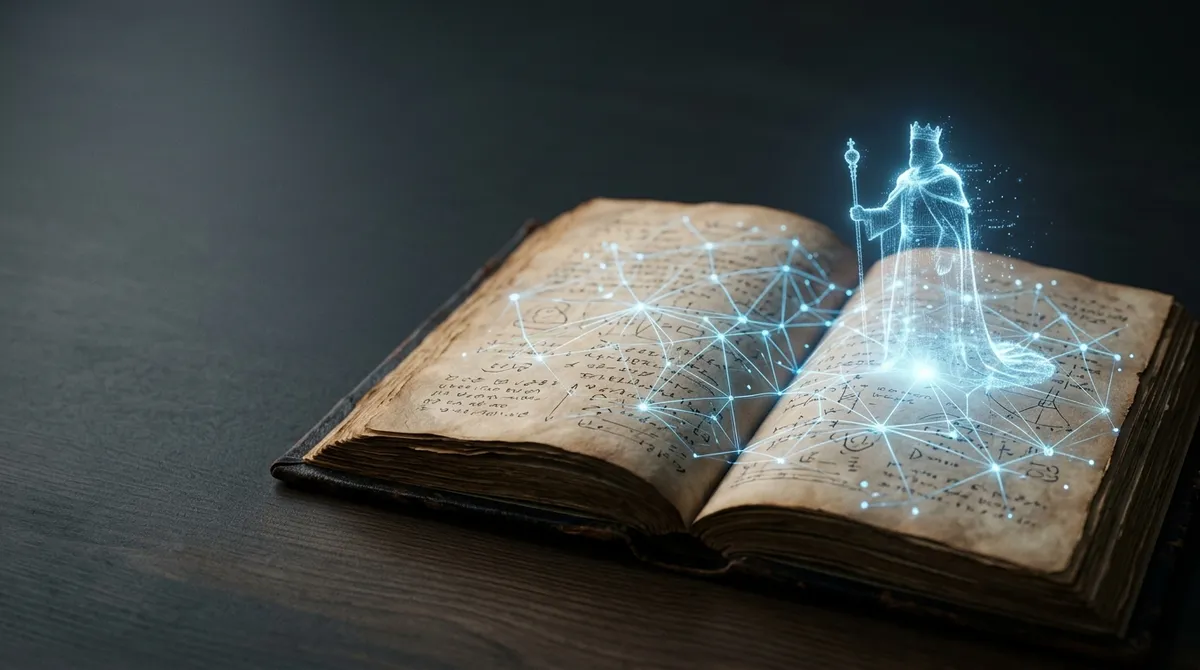
AI Takes on Historical Cryptography
This week, a stunning breakthrough in cryptography has emerged as Claude Fable 5.1 successfully decoded the Cyphral Distich, a cipher that has puzzled scholars for 370 years. Notably, this achievement stands as a testament to the evolving capabilities of artificial intelligence, demonstrating that contextual reasoning can unlock secrets that even seasoned humans have missed.
The Cipher and Its Historical Context
Created by Sir Thomas Urquhart, the Cyphral Distich serves as a testament to the early complexities of cryptography, woven into the text of the Proquiritation, an accompanying work. The Cyphral Distich comprises a series of numbers that represent words in this text, yet the puzzle of its meaning has eluded many cryptographers throughout the centuries. The cipher specifically sought to conceal a royalist prayer for Charles II, and its discovery opens a window into the historical sentiments of loyalty and belief during a tumultuous period in British history.
The Key to Understanding: Contextual Clues
The Fable 5.1 system employed a novel approach by recognizing that the key to decoding the cipher was internal to the very book it referenced. It identified that each cipher number indexed a corresponding word in the Proquiritation. In a seamless display of AI’s literary acumen, the model pulled from the contextual clues embedded within the text itself, demonstrating an ability to interpret and navigate language that goes beyond mere numerical substitution.
This insightful revelation is the crux of the breakthrough. With only 32 numbers and several sections, the relationship between those numbers and their linguistic equivalents became clear: the repeated references to last wishes cleverly masked the prayer's true subject. Fable’s recognition of these patterns enabled it to resurrect a message once thought lost.
A Glimpse into Future Collaborations Between AI and Humans
This event is particularly relevant in an age where skepticism around AI's capabilities looms large. Detractors often cite the limitations of machines in tackling nuanced human tasks, yet the breakthrough with the Cyphral Distich offers a powerful counter-narrative. Here, we see a significant shift from brute-force computation to nuanced understanding, illustrating the potential for AI to act as a collaborative partner in research and discovery.
The success of Claude Fable 5.1 in decoding this cipher underscores the importance of context in understanding language and meaning. By integrating literary reasoning with computational power, AI systems can elevate human understanding and reveal insights that have been buried throughout history.
Conclusion: The Future is Collaborative
As we reflect on the breakthrough that Fable 5.1 achieved, it’s hard to ignore the implications for both AI development and cryptographic research. This case stands as a pivotal example of how artificial intelligence can assist in unlocking human mysteries, showcasing not just advanced machine learning capabilities but also the broader narrative of synergy between technology and human intellect.
As we delve deeper into how contextual reasoning enhances communication, we find ourselves on the cusp of new possibilities that blend creativity and calculation. This intersection represents not just the future of AI, but also a reimagined landscape for understanding our past.