
A Market on the Move
The business of building games is undergoing a fundamental transformation. According to a market analysis by Spherical Insights, the AI-powered game development and procedural content creation market was valued at approximately USD 6.8 billion in 2025 and is projected to reach USD 28.4 billion by 2035 — representing a compound annual growth rate (CAGR) of 15.2%.
That kind of growth signals more than a passing trend. It suggests that artificial intelligence and procedural generation are becoming core infrastructure for how games are designed, scaled, and delivered to players around the world.
Why Studios Are Turning to AI
The pressure on game studios has never been greater. Players expect larger open worlds, faster content updates, and increasingly personalized experiences — all while studios face mounting costs and tighter development timelines.
AI tools and procedural content generation are emerging as a practical answer to this challenge. Rather than hand-crafting every environment, quest, or character behavior, developers can use AI-driven systems to automate and scale content creation in ways that were previously impossible or prohibitively expensive.
According to reports, AI is being applied across multiple aspects of game production — from auto-generating environments and landscapes to powering more realistic NPC (non-player character) behavior and enabling live, dynamic content updates that keep games feeling fresh long after launch.
What Procedural Content Actually Means
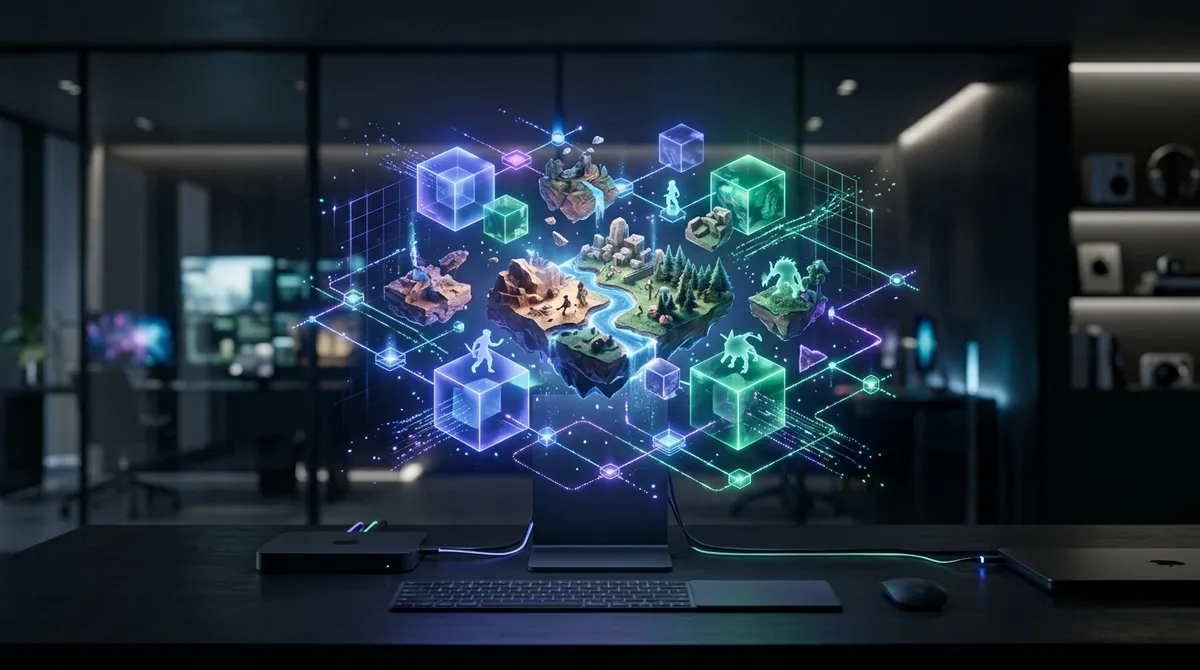
For those less familiar with the term, procedural content generation refers to the use of algorithms — increasingly AI-driven ones — to create game content automatically rather than manually. Think of the near-infinite planets in a space exploration game, or a dungeon layout that's different every time you play.
In open-world games especially, procedural generation solves a real scalability problem. Building a believable, explorable world by hand requires enormous teams and time. AI-assisted tools can generate terrain, populate environments, and even script narrative events at a fraction of the traditional cost and timeline.
As AI capabilities advance, these systems are becoming smarter — producing content that feels less mechanical and more intentional, blurring the line between algorithmic output and human design.
A Level Playing Field for Indie Developers
One of the more compelling implications of this market shift is what it means for smaller studios. Historically, the gap between indie developers and AAA game studios has been defined by resources — budget, headcount, and production time.
AI-powered development tools have the potential to close that gap significantly. With access to the same procedural generation and AI-assisted design tools, a small team can now build content at a scale that would have required a much larger operation just a few years ago. This democratization of game development could lead to a new wave of ambitious indie titles that punch well above their weight.
For investors and platform holders, that's an interesting signal too. A broader pool of competitive developers means more content, more diversity in game design, and potentially more disruption to established studio hierarchies.
What a $28.4 Billion Market Means
The projected market size reflects more than just tool adoption — it speaks to a broader rethinking of game development as a discipline. As AI moves from experimental feature to production standard, the economic footprint of these technologies will touch everything from middleware vendors and engine developers to cloud infrastructure providers and independent tool makers.
For tech professionals and investors watching the space, the 15.2% CAGR signals sustained, long-term demand rather than a short-lived spike. Game development is one of the most computationally intensive creative industries on the planet, and AI is giving it new ways to scale.
The Player Experience Angle
Beyond the business and production side, there's a meaningful shift happening in how players actually experience games. AI-driven personalization means that two players moving through the same game world might encounter different challenges, storylines, or environments based on their behavior and preferences.
Live content updates powered by procedural systems can also keep games relevant for longer, reducing the boom-and-bust cycle that often sees player bases drop sharply after launch. For game publishers, that translates to longer engagement windows and more sustainable revenue models.
Looking Ahead
The trajectory from USD 6.8 billion to USD 28.4 billion over a decade is a strong indicator that AI-powered game development is no longer a future concept — it's an active and accelerating reality. As tools become more capable and accessible, the way games are made, and the kinds of games that become possible, will continue to evolve at pace.
For developers, investors, and players alike, the next ten years in gaming could look very different from the last.