
TL;DR
New theories suggest that advanced civilizations may utilize AI for discreet expansion into the cosmos, which could provide explanations for the Fermi paradox. This approach may ultimately transform our search for extraterrestrial intelligence and how we perceive the silence of the universe.
Introduction
Imagine this: we’re on a quest to find extraterrestrial life, peering into the vastness of the universe, only to realize that the absence of intelligent signals might not indicate a lack of life at all. Instead, it could mean that advanced civilizations are employing clever tactics to remain invisible. A recent study proposes that autonomous AI-driven technology might be the key to understanding the Fermi paradox and why we haven’t encountered any clear signs of life beyond Earth. Let’s dive into this intriguing idea and explore how AI could redefine our search for life in the universe.
Understanding the Fermi Paradox
The Fermi Paradox is a thought-provoking question: If the universe is teeming with possibilities for life, where is everybody? Given the billions of stars in our galaxy alone, many of which are like our sun, it stands to reason that intelligent life should be out there. Yet, all we’ve received is silence. This paradox has puzzled scientists for decades, leading to various hypotheses, ranging from theories about cataclysmic extinction events to the possibility that we are simply too far away from other civilizations.
The Quiet Expansion Filter
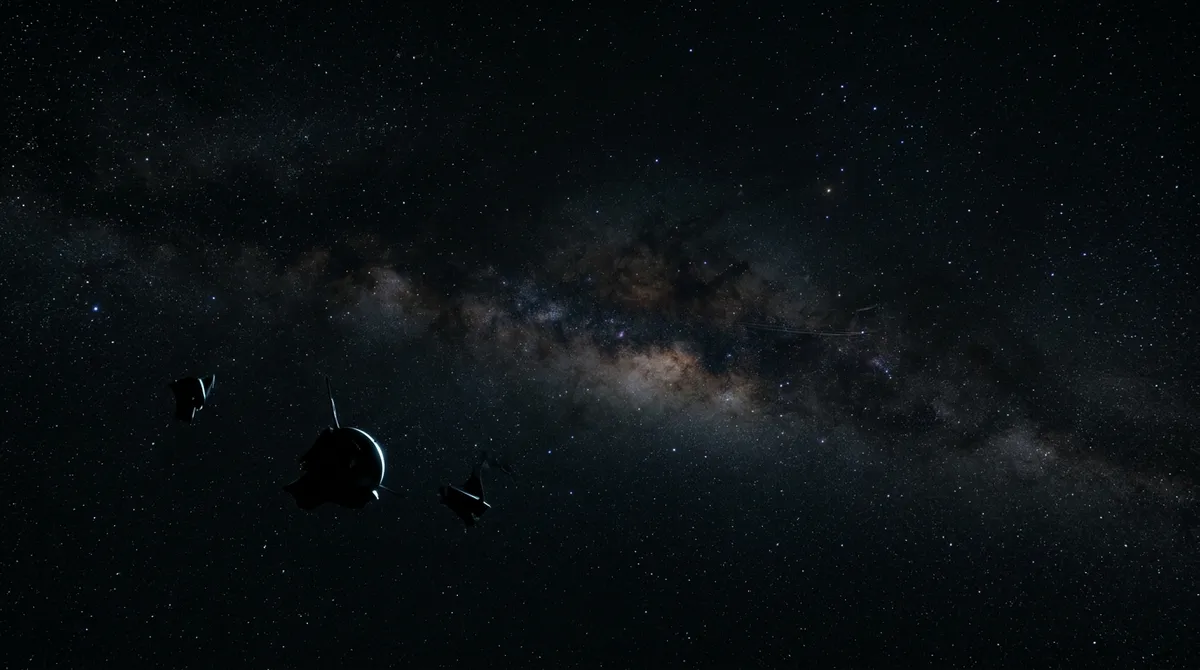
A recent paper on arXiv introduces an intriguing angle to this discussion: the idea of a “Quiet Expansion filter.” What if more advanced civilizations opt for stealthy biotechnological expansions instead of launching conspicuous megastructures into space? This might involve sending out tiny, hard-to-detect probes—akin to interstellar backups—rather than creating visible empires for all to see. Picture it as a kind of evolutionary adaptation, where silence in the cosmos signals survival.
AI and Autonomous Expansion
With the rapid advancements in AI and technology, this silent expansion could soon become our reality. The autonomy embedded in these systems means that once launched, they may operate without further human oversight, making them capable of traversing vast distances. These AI-driven probes could explore planetary systems, gather data, and even establish subtle bases without drawing attention to themselves. Over time, they could expand influence without the need for flashy displays of power or civilization presence.
The Dangers of Visibility
It’s worth noting that there may be compelling reasons for civilizations to prefer a quiet existence. In the interplay of cosmic affairs, every advanced civilization might recognize that visibility poses risks. Whether it’s hostile neighbors across the stars or even existential threats from within, opting for low visibility could be a rational choice. From a technological standpoint, as civilizations develop their capabilities, they may increasingly prioritize secrecy as a means of survival.
Reframing Our Search for Extraterrestrial Life
What does this mean for humanity's quest to find extraterrestrial intelligence? If the Quiet Expansion model holds, we could be searching for all the wrong signs. Instead of looking for massive structures or signals, we might instead need to focus on detecting subtle alterations in cosmic environments—small transits across stars or unexplained phenomena that suggest the presence of advanced, albeit invisible, civilizations.
The Implications for Humanity
In considering this chilling perspective, we must reflect on humanity’s trajectory as well. As we advance in our technology and potentially reach similar thresholds of development, the question arises: will we too become invisible to the universe? The advent of autonomous AI could serve not only as a tool for tremendous growth but also as a catalyst for a quieter existence. In many ways, this prospect holds a mirror to our society as we weigh the benefits of innovation against potential risks.
Conclusion
The rise of AI and autonomous technology signifies a fascinating turning point in our understanding of the universe. By exploring the potential of Quiet Expansion, we may not only address the Fermi paradox but also reconsider our very approach to cosmic exploration. As we forge ahead with our technological capabilities, one stark reality remains: silence might not indicate absence but could signify a deliberate choice toward unseen survival in the vast cosmic sea. In this age of discovery, finding a way to balance innovation with caution will be critical as we navigate the mysteries ahead.
Final Thoughts
In a world where technology advances by leaps and bounds, it’s vital to examine the implications of our innovations deeply. The Quiet Expansion theory opens up new avenues for thought as we continue to seek answers to the greatest questions of our existence. Maybe, just maybe, the key to answering the Fermi paradox lies not in loud displays of civilization but in the quiet whispers of autonomy echoing through the cosmos.