
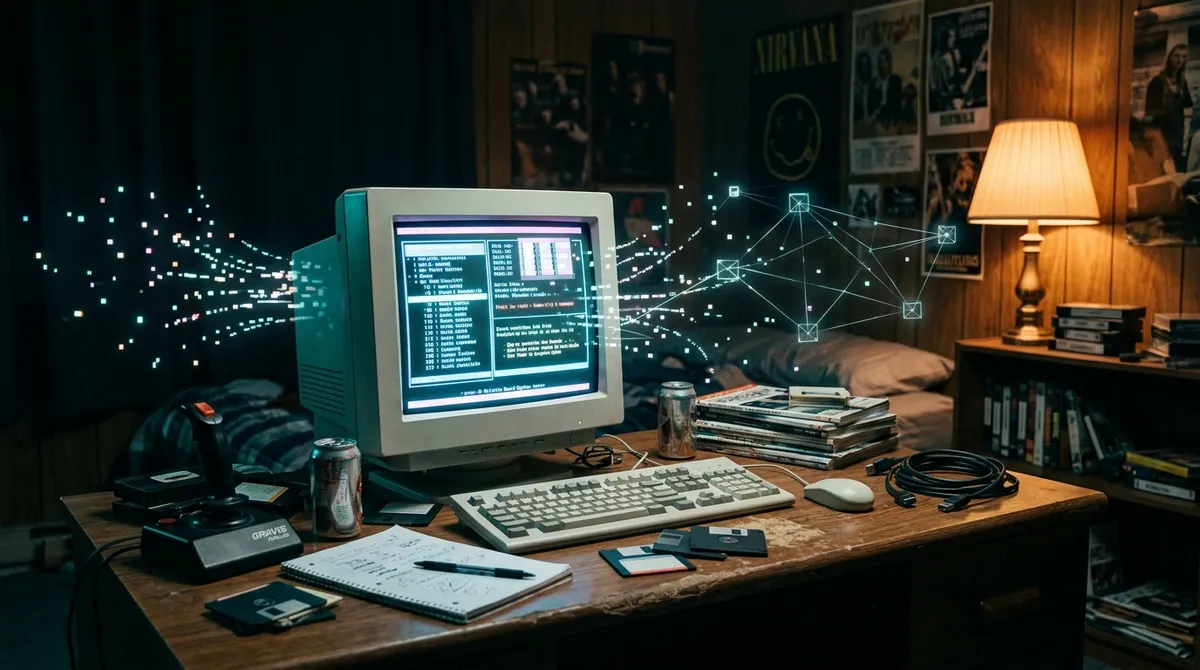
The Pre-Internet Programming Underground
Long before GitHub repositories and Discord servers, teenage programmers were quietly building the foundation of today's collaborative developer culture from their bedrooms. According to reports, enthusiastic young hackers relied on floppy disks to trade innovative programs, creating the earliest forms of code sharing that would eventually evolve into the open-source movement we know today.
Among these bedroom coders was Markus Persson, who would later create Minecraft. But before becoming a household name in gaming, Persson and countless other teenage hobbyists were part of an underground network that used primitive technology to share knowledge and troubleshoot code together.
Bulletin Board Systems: The First Developer Communities
Before the World Wide Web existed, bulletin board systems (BBS) emerged as the internet's first virtual communities. These text-based networks allowed programmers to connect across distances, sharing not just code but also the collaborative spirit that defines modern development culture.
These early systems enabled young developers to move beyond the isolation of solo programming. Instead of working in complete isolation, they could share their projects, get feedback, and learn from peers who shared their passion for creating software and games.
From Floppy Disks to Global Collaboration
The evolution from floppy disk trading to today's sophisticated development platforms represents one of technology's most significant cultural shifts. What started as physical exchanges of storage media between local programming enthusiasts has transformed into global networks of developers collaborating in real-time.
According to reports, this early culture of sharing and collaboration laid crucial groundwork for modern development practices. The spirit that drove teenagers to copy and share programs on physical media would eventually influence everything from repository platforms like GitHub to the open-source movement that powers much of today's software infrastructure.
Gaming as Software Engineering School
The article suggests that early game development served as an unofficial software engineering education for many programmers. Young developers working on game projects weren't just creating entertainment—they were unknowingly learning the collaborative and technical skills that would become essential in professional software development.
This connection between gaming and broader software development culture helps explain why many of today's most innovative tech companies have roots in gaming communities. The problem-solving skills, creative thinking, and collaborative approaches learned in bedroom game development translated directly to other areas of software engineering.
The Minecraft Connection
The influence of this early collaborative culture becomes particularly clear when examining the success of Minecraft. According to reports, the forgotten culture of BBS communities and floppy disk sharing made projects like Minecraft possible by establishing patterns of community-driven development and user-generated content.
Minecraft's emphasis on player creativity, modding communities, and collaborative building directly reflects the values established by those early bedroom programmers who shared their work freely and built upon each other's innovations.
Legacy in Modern Development Culture
Today's development ecosystem—from GitHub repositories to Discord servers for developers, from Reddit programming communities to AI-assisted coding platforms—can trace its collaborative DNA back to these pre-internet programming communities. The fundamental principle that knowledge and code should be shared for collective advancement remains unchanged, even as the tools have evolved dramatically.
As modern creators increasingly rely on platforms like GitHub for version control, Discord for real-time collaboration, and various forums for troubleshooting, they're participating in a culture that teenage hobbyists established decades ago using much more primitive technology.
Renewed Relevance
This historical perspective gains particular relevance as nostalgia for early internet culture collides with renewed interest in indie game development and creator-led tech communities. Understanding how bedroom coding evolved from a lonely hobby into a global movement provides valuable context for today's independent developers and tech entrepreneurs.
The story of how teenage programmers accidentally helped create the internet's collaborative culture serves as both historical record and inspiration for the next generation of developers building tomorrow's digital communities.