
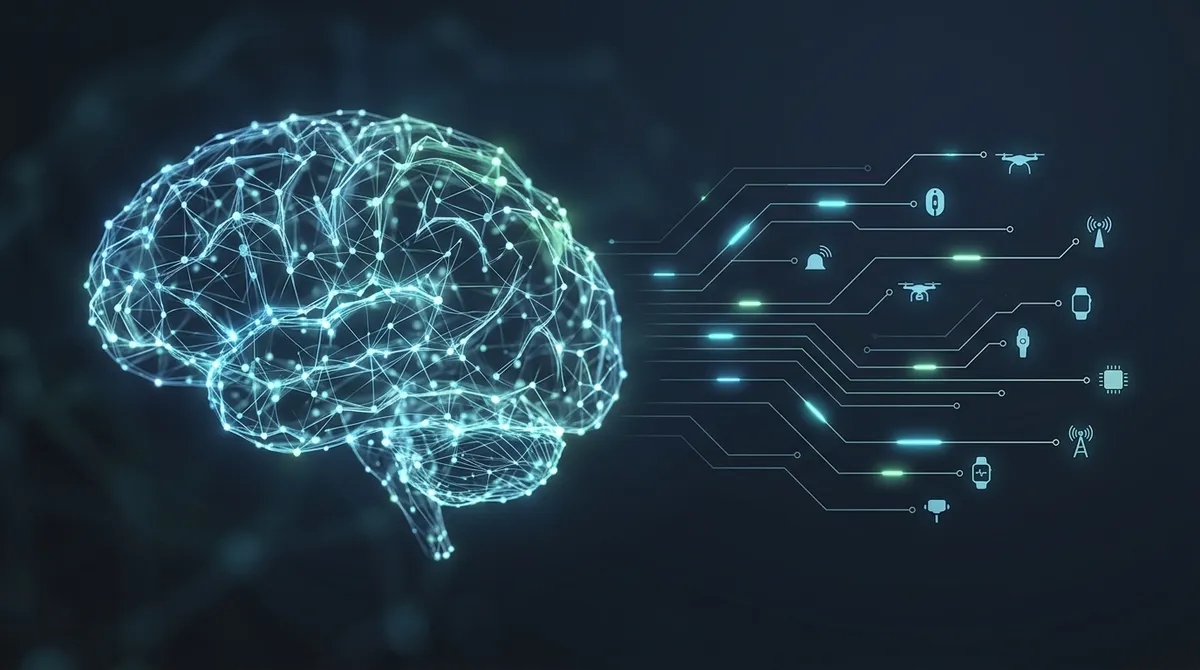
The Energy Crisis Threatening AI's Future
As artificial intelligence systems grow larger and more powerful, their energy demands are rising dramatically, creating a sustainability crisis that could limit AI's future deployment. Current large language models and machine learning systems require massive computational resources, driving up costs and environmental impact across data centers worldwide.
Now, researchers at the University of Massachusetts Amherst may have found a solution that could fundamentally change how AI systems operate. According to reports published in Nature Communications, the team has developed a new architecture called ANT (Asynchronous Neural Turing networks) that aims to make AI learn continuously in real time while using far less energy by operating more like the human brain.
How Brain-Like Computing Could Transform AI
The ANT architecture represents a departure from traditional AI computing approaches. Instead of processing information in the synchronized, power-hungry manner of current systems, this new approach mimics how biological brains work—asynchronously and with remarkable efficiency.
This brain-inspired design could address one of AI's most pressing challenges: the exponential growth in compute costs and energy consumption as models scale up. Current AI systems often require enormous amounts of power to train and operate, making them impractical for many real-world applications where energy is limited.
Implications for Real-World AI Applications
The potential impact of this energy-efficient architecture extends far beyond research labs. According to reports, asynchronous computing could reshape how AI is deployed in several key areas:
Robotics and Autonomous Systems: Future robots could learn continuously on tiny power budgets, making them more practical for extended missions or remote operations where battery life is critical.
Edge Computing: Devices at the network edge could run sophisticated AI models without requiring constant connection to power-hungry data centers.
Autonomous Vehicles: Self-driving cars could process real-time data more efficiently, potentially improving both performance and range for electric vehicles.
Mobile and IoT Devices: Smartphones, tablets, and Internet of Things devices could run more capable AI features without draining batteries quickly.
The Race for Sustainable AI
The development of ANT architecture comes at a critical time when the tech industry is grappling with AI's environmental impact. Data centers powering AI systems are consuming increasing amounts of electricity, and the trend toward larger models has created a sustainability challenge that researchers and companies are racing to solve.
The brain-like efficiency promised by asynchronous neural networks could offer a path forward that doesn't require choosing between AI capability and environmental responsibility. By learning continuously in real time while using orders of magnitude less energy, these systems could make advanced AI accessible in scenarios where current approaches are simply too power-hungry to be practical.
Looking Ahead: Challenges and Opportunities
While the ANT architecture shows promise, significant challenges remain in translating this research into commercial applications. The transition from traditional synchronous computing to asynchronous systems will likely require new hardware designs, software frameworks, and development methodologies.
However, the potential benefits are substantial enough to warrant serious attention from both researchers and industry leaders. As AI systems become more prevalent in daily life, finding ways to make them more energy-efficient isn't just an environmental imperative—it's also an economic necessity for sustainable growth in the field.
The success of brain-inspired architectures like ANT could determine whether AI remains concentrated in large data centers or becomes truly ubiquitous across devices and applications where power efficiency is paramount. For the technology industry, this research represents a crucial step toward making AI both more capable and more sustainable.