In the rapidly evolving realm of satellite technology, ensuring the safety and coordination of space assets is paramount. Recent developments have highlighted the critical need for effective management systems in Earth's orbit. A recent close encounter between a SpaceX Starlink satellite and a Chinese satellite underscores the challenges of maintaining order in increasingly crowded skies.
SpaceX's Starlink constellation, aimed at providing global internet coverage, consists of thousands of small satellites in low Earth orbit. This ambitious project has been a game-changer for internet accessibility but also raises concerns about orbital congestion. The recent near-collision with a Chinese satellite brings these issues into sharp focus.
Understanding the Recent Near-Miss
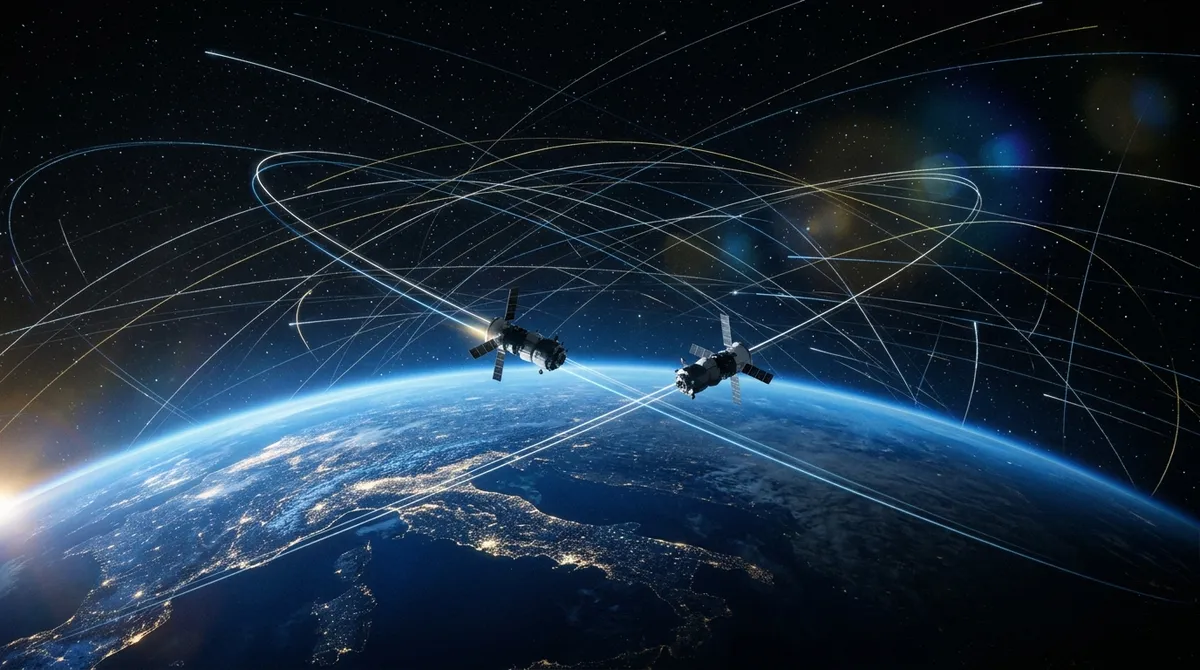
Last week, a Starlink satellite came perilously close to a Chinese satellite from the country's Earth observation program. The near-miss occurred when the two satellites passed within a few kilometers of each other. This incident has prompted discussions about the need for enhanced coordination among satellite operators to prevent potential collisions.
The close encounter highlights the challenges of managing thousands of satellites in orbit. As more countries and private companies launch their own satellites, the risk of such near-misses is expected to increase. This incident serves as a crucial reminder of the importance of satellite traffic management systems.
The Growing Challenge of Satellite Traffic
As the number of satellites in orbit rises, so does the complexity of managing their paths. The Starlink project alone plans to deploy tens of thousands of satellites. With such a significant increase in orbital objects, the need for robust systems to track and manage satellite paths becomes crucial.
Currently, the United States Space Surveillance Network monitors these satellites, but the sheer volume makes it increasingly difficult to predict and prevent collisions. This challenge is compounded by the varying capabilities of tracking systems worldwide, which can lead to discrepancies in satellite path predictions.
International Collaboration is Key
In light of these challenges, international collaboration is becoming increasingly vital. Countries and companies must work together to establish a comprehensive framework for satellite traffic management. Such collaboration could involve sharing data on satellite positions and movements to improve accuracy in predicting potential collisions.
Efforts to create a global space traffic management system are underway, but progress is slow. The lack of a unified regulatory body for space activities makes it difficult to enforce standardized practices. However, recent incidents like the Starlink near-miss are accelerating discussions on how best to achieve coordinated management.
The Role of Advanced Technologies
Advancements in technology offer promising solutions to these challenges. Artificial intelligence and machine learning can enhance the accuracy of satellite tracking and collision prediction. By processing vast amounts of data, these technologies can predict potential collisions more reliably and rapidly than human operators.
Additionally, autonomous systems onboard satellites can enable them to maneuver independently when potential collisions are detected. This capability reduces the reliance on ground-based systems and allows for more immediate responses to collision threats.
Looking Ahead: Ensuring Safe Skies
The incident involving the Starlink and Chinese satellites is a wake-up call for the international space community. As we continue to push the boundaries of space technology, ensuring the safety and sustainability of Earth's orbit is crucial. Developing and implementing effective satellite traffic management systems is an essential step in this process.
Through international cooperation and the adoption of advanced technologies, we can mitigate the risks of satellite collisions. By prioritizing safety and coordination, the space industry can continue to thrive and innovate, ensuring a secure and sustainable future for space exploration and satellite operations.