Revolutionary Building Coating Transforms Urban Energy
Researchers at City University of Hong Kong have unveiled two groundbreaking sustainable technologies that could reshape how cities approach energy production and building efficiency. The innovations address critical urban sustainability challenges as metropolitan areas worldwide pursue carbon neutrality goals amid rising energy costs.
The first breakthrough, called BRIDGE skin, represents a paradigm shift in building energy systems. This paintable coating serves dual purposes: cooling buildings while simultaneously harvesting energy from rainfall. According to reports, the technology draws inspiration from nature, specifically mimicking Tillandsia air plants to solve complex engineering trade-offs in building coatings.
The significance of a paintable solution cannot be overstated for urban environments. Unlike rigid solar panels that require extensive installation infrastructure, this coating can retrofit existing buildings seamlessly, making sustainable technology adoption more accessible across diverse architectural landscapes.
Copper Breakthrough Democratizes Hydrogen Production
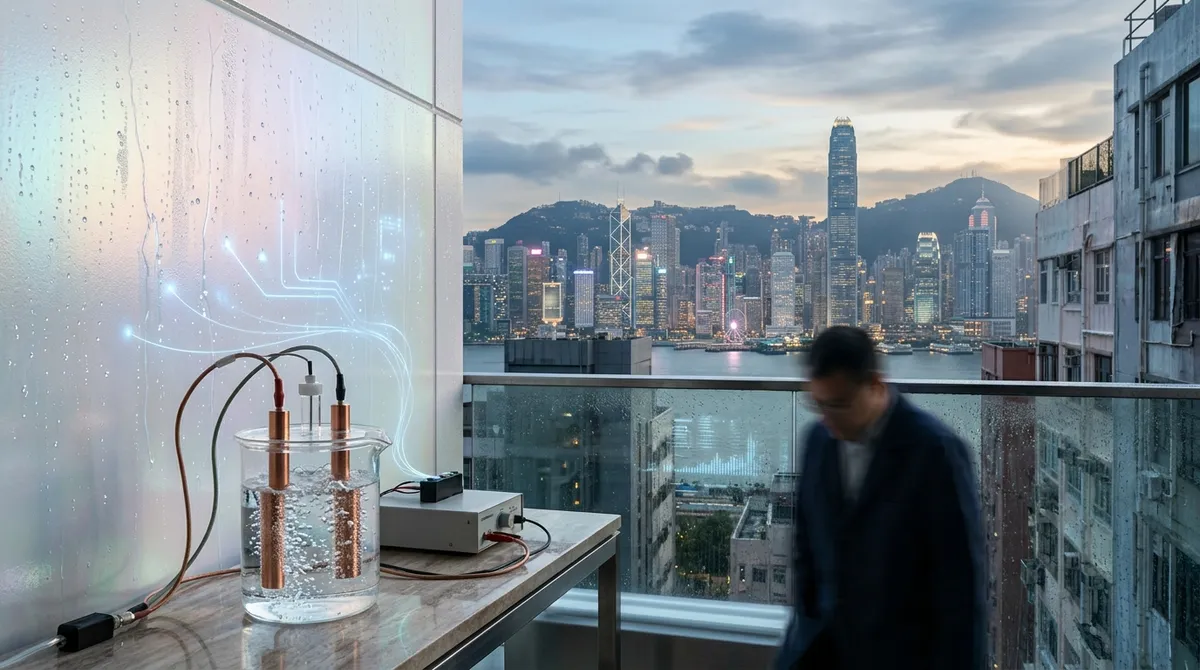
The second innovation tackles one of clean energy's most persistent challenges: expensive hydrogen production. The research team has developed a copper-ion-based system that generates clean fuel continuously and affordably, eliminating dependence on costly platinum catalysts.
This copper-based approach represents a potential game-changer for hydrogen accessibility. Platinum's scarcity and high cost have long been barriers to widespread hydrogen adoption. By replacing it with abundant copper, according to reports, the technology could democratize hydrogen production and make clean fuel economically viable for broader applications.
The system operates around the clock, functioning in both darkness and daylight to ensure continuous clean energy production. This consistency addresses intermittency issues that plague many renewable energy sources.
Bio-Inspired Engineering Meets Urban Reality
Both technologies exemplify how bio-inspired design can solve real-world climate problems. The BRIDGE skin's mimicry of air plant mechanisms demonstrates nature's solutions can be translated into practical engineering applications for urban environments.
The timing of these innovations is particularly relevant for high-density regions like Hong Kong and the Greater Bay Area, which face significant energy market volatility and mounting climate pressures. As these regions work toward sustainability goals, such technologies offer concrete pathways for reducing carbon footprints while managing energy costs.
Circular Economy Principles in Action
The research emerges from the JC STEM Lab of Circular Bio-economy at City University of Hong Kong, reflecting a broader commitment to closed-loop systems that reduce waste and create self-sustaining technologies. This circular economy approach underpins both innovations, designed to maximize resource efficiency while minimizing environmental impact.
The paintable nature of the building coating and the abundance of copper for hydrogen production align with circular economy principles by utilizing readily available materials and reducing dependency on rare resources.
Implications for Urban Sustainability
These developments arrive as cities globally race to meet ambitious carbon reduction targets. The practical advantages of retrofittable solutions like paintable coatings and affordable hydrogen production could accelerate sustainable technology adoption across diverse urban contexts.
For building owners and city planners, the BRIDGE skin technology offers a less disruptive path to energy efficiency compared to traditional solar installations. Meanwhile, accessible hydrogen production could support various urban applications, from transportation to energy storage.
The research demonstrates how universities are increasingly driving practical solutions to climate challenges. By focusing on cost-effectiveness and ease of implementation, these innovations address not just technical feasibility but also the economic and logistical barriers that often prevent sustainable technology adoption.
As urban populations continue growing and climate pressures intensify, such breakthrough technologies may prove essential for creating truly sustainable cities. The combination of nature-inspired design, abundant materials, and retrofittable solutions suggests a promising direction for urban sustainability efforts worldwide.