AI Scientists Enter the Research Arena
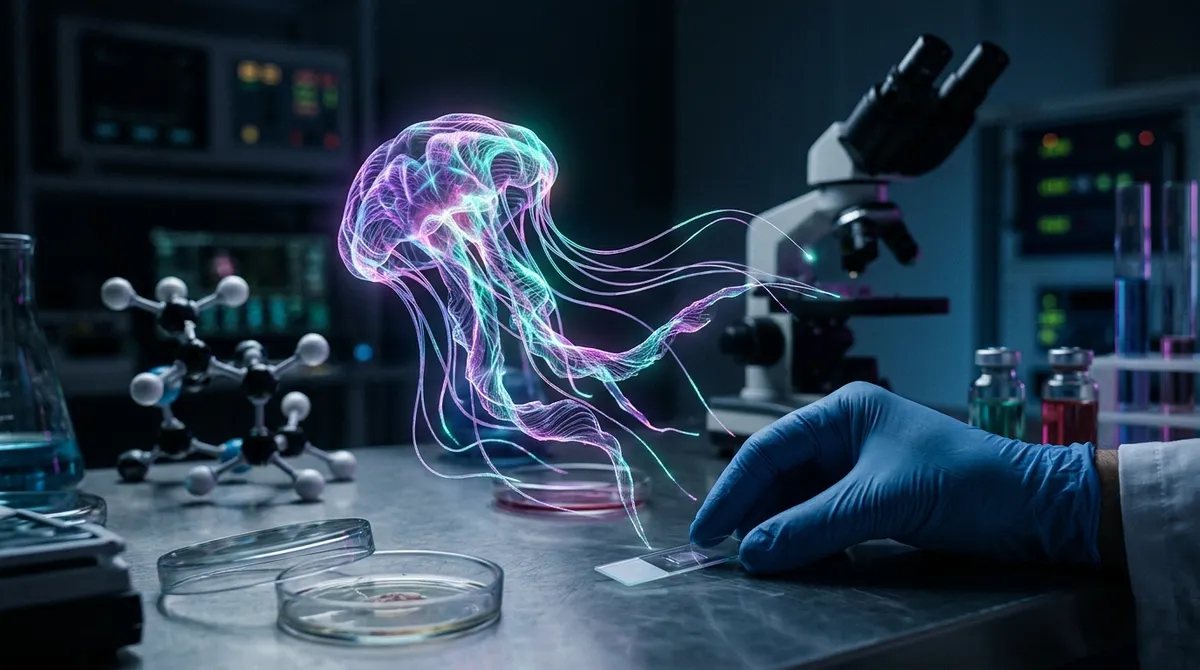
Two new artificial intelligence systems are making waves in scientific research, but their capabilities reveal as much about AI's limitations as its potential. Google DeepMind's Co-Scientist and Future House's Robin represent the latest attempt to automate parts of the scientific discovery process, according to reports.
These "AI scientist" systems demonstrate the ability to help generate hypotheses and identify promising drug candidates. However, both systems still depend heavily on human guidance and real-world validation to produce meaningful results.
The Promise of Automated Research
The emergence of AI scientists comes at a time when artificial intelligence is rapidly moving from writing assistance into scientific discovery. This shift has generated both excitement about the possibility of faster breakthroughs and concern about potential downsides, including lower-quality research, fabricated citations, and unreliable outputs.
According to reports, these systems show genuine utility in specific areas of research. They excel at literature review, hypothesis generation, and candidate ranking—tasks that traditionally require significant time and effort from human researchers. The ability to quickly synthesize vast amounts of existing research and identify patterns could accelerate the early stages of scientific investigation.
Where AI Falls Short
Despite their capabilities, these AI scientists reveal fundamental limits that highlight why human researchers remain essential. The core argument emerging from evaluations is that language-based AI can accelerate parts of science but cannot replace grounded experimentation or domain-specific models.
The systems' reliance on language as their primary interface creates inherent weaknesses. Scientific discovery often requires highly specialized knowledge and the ability to make connections between far-flung facts—capabilities that require more than linguistic processing. Scientists must combine deep analysis with broad reasoning strategies, something current AI systems struggle to replicate effectively.
Drug Discovery Applications
One area where AI scientists show particular promise is drug discovery. The ability to process vast databases of molecular information and identify potential therapeutic candidates could significantly speed up the early stages of pharmaceutical research. However, according to reports, these systems still require extensive human oversight and experimental validation.
The drug discovery process involves complex interactions between biological systems that cannot be fully captured through language models alone. While AI can help narrow down possibilities and suggest promising avenues for investigation, the fundamental work of testing and validation remains firmly in human hands.
The Risk of Automated Papers
As multi-agent AI systems become more visible in research settings, concerns about automated research papers are growing. The promise of AI-generated scientific literature raises questions about quality control, peer review processes, and the reliability of automated conclusions.
Reports suggest that while these systems can assist in writing and structuring research papers, the underlying science still requires human expertise to ensure accuracy and meaningful conclusions. The risk of fabricated citations and unreliable outputs underscores the need for continued human oversight in the research process.
Collaboration, Not Replacement
The key insight from these developments is that AI scientists function best as collaborators rather than autonomous researchers. They excel at tasks that involve processing large amounts of information quickly and identifying patterns that might escape human notice. However, they cannot replace the critical thinking, experimental design, and domain expertise that human scientists bring to research.
According to reports, the most effective approach involves using these AI systems to augment human capabilities rather than replace them. This collaborative model allows researchers to leverage AI's computational advantages while maintaining the scientific rigor and creativity that human expertise provides.
Looking Ahead
As AI continues to evolve, understanding what these tools actually can and cannot do becomes increasingly important. The emergence of Co-Scientist and Robin provides valuable insights into both the potential and limitations of AI in scientific discovery.
While these systems represent significant technological achievements, they also demonstrate that the fundamental aspects of scientific research—hypothesis testing, experimental validation, and critical analysis—remain uniquely human capabilities. The future of scientific discovery likely lies not in AI replacement but in thoughtful collaboration between human expertise and artificial intelligence capabilities.