
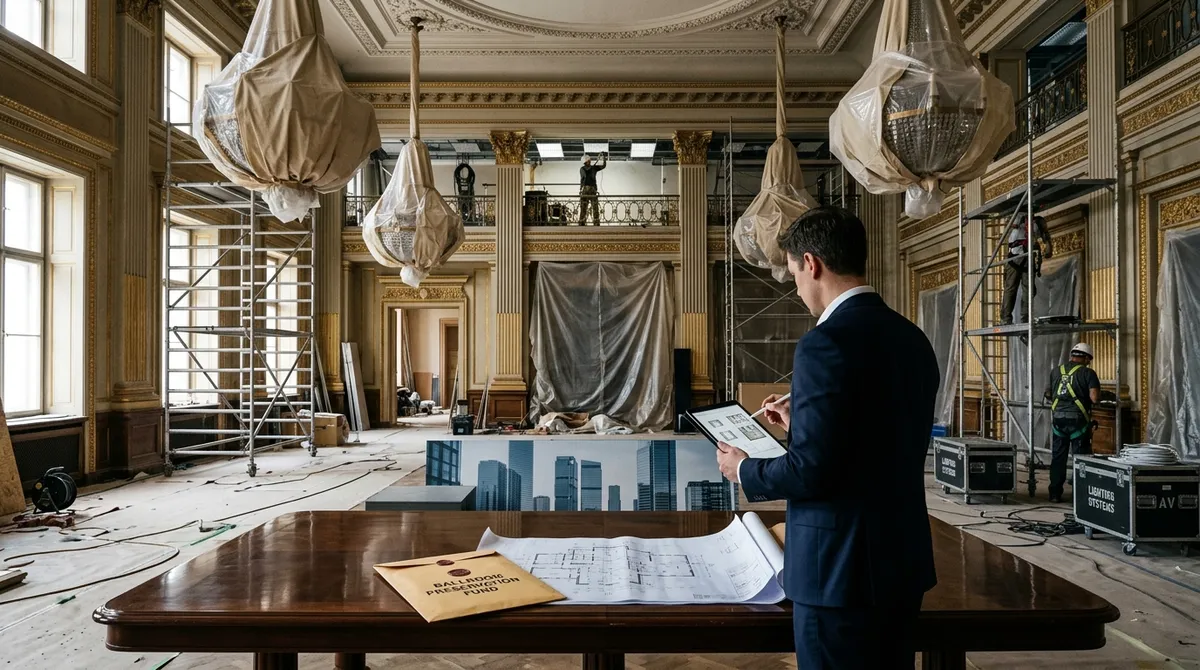
The recent renovation of a White House ballroom has attracted attention, not just for its aesthetic updates but also for its funding sources. This project highlights a collaboration between the government and private tech giants like Microsoft and Amazon. The involvement of these companies in the renovation has sparked discussions about their influence and role in the public sector.
Modernizing a Historical Venue
The White House ballroom, a space often used for state functions and high-profile events, underwent significant renovations. These upgrades were aimed at enhancing the venue's technological capabilities while preserving its historical charm. The ballroom, with its rich history, serves as a symbol of American heritage, making its modernization a subject of national interest.
Tech Giants' Contributions
Microsoft and Amazon played pivotal roles in the refurbishment project by providing substantial donations. Their contributions were not merely financial; they also offered technological support that ensured the ballroom was equipped to handle modern-day requirements. Such involvement of major corporations in governmental projects raises questions about corporate influence and the blending of public and private interests.
Implications of Corporate Involvement
The participation of tech companies in public sector projects is not uncommon, but it often leads to debates about transparency and influence. Critics argue that such partnerships could give these companies undue leverage in government affairs. On the other hand, supporters believe that leveraging private sector expertise can lead to cost-effective and innovative solutions for public projects.
Balancing Heritage and Innovation
One of the main challenges of the ballroom renovation was maintaining its historical integrity while integrating state-of-the-art technology. This dual objective required careful planning and execution. The result is a venue that respects its past yet is equipped for the demands of contemporary use, showcasing how heritage and innovation can coexist.
Public Reaction and Future Prospects
The public reaction to the renovation has been mixed. While some appreciate the modern touches and the enhanced functionality, others question the necessity of involving large corporations in such projects. The debate continues about the appropriateness of corporate sponsorship in government endeavors, particularly in spaces as symbolic as the White House.
Looking ahead, this project could set a precedent for future collaborations between the government and the private sector. As technological advancements continue to shape infrastructure needs, such partnerships may become more common, though they will likely remain a topic of public scrutiny.
Conclusion
The White House ballroom renovation serves as a microcosm of broader trends in public-private partnerships. It highlights the potential benefits of such collaborations, including innovation and cost efficiency. However, it also underscores the need for transparency and careful consideration of corporate influence. As the nation navigates these complex dynamics, the balance between heritage conservation and modernization will remain crucial.