
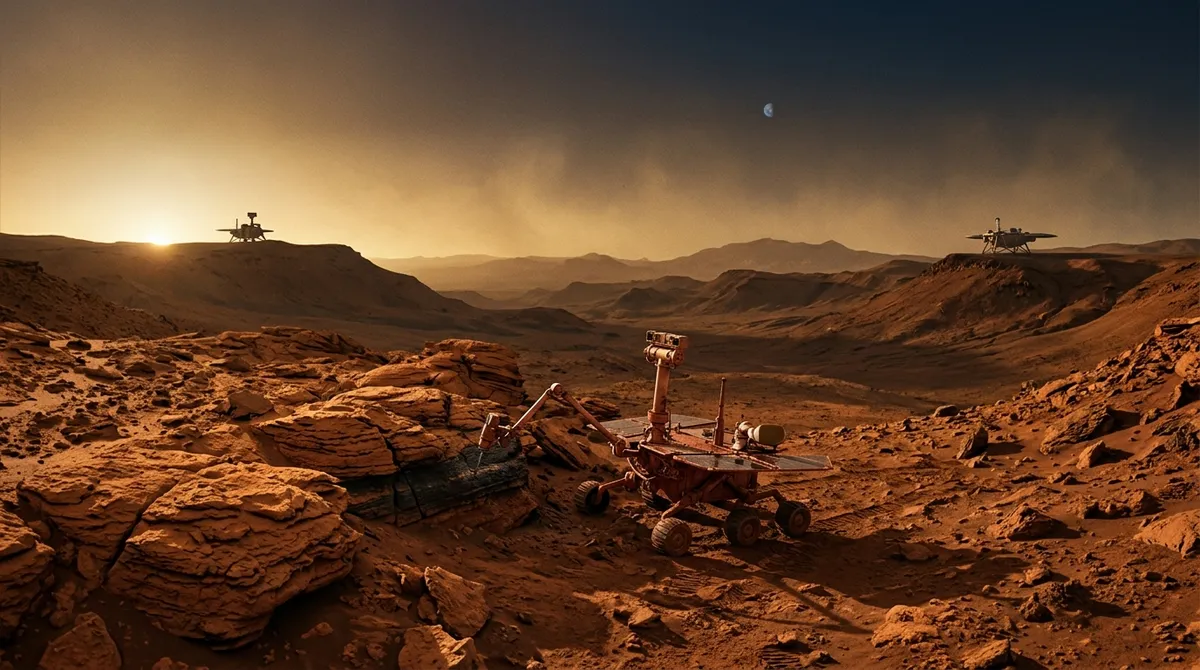
In recent years, the race to explore Mars has intensified, with the United States and China leading the charge. Both nations aim to achieve significant milestones in returning samples from the Red Planet, a pursuit that has captured global attention. As these two superpowers push the boundaries of space exploration, their efforts are shaping the future of interplanetary science.
The Importance of Mars Sample Return Missions
Mars sample return missions are pivotal for understanding the planet's geological history and potential for past life. By analyzing Martian soil and rock samples on Earth, scientists can gain insights that are impossible to obtain through remote sensing alone. These missions promise to unlock secrets about the planet's climate, its water history, and the potential habitability of its surface.
NASA's Ambitious Plans
The National Aeronautics and Space Administration (NASA) has been at the forefront of Mars exploration for decades. NASA's Perseverance rover, which landed on Mars in 2021, is a key player in the sample return mission. The rover is tasked with collecting and caching samples from the planet's surface, which will later be retrieved by a future mission. This multi-phase endeavor involves launching a spacecraft to Mars, gathering the samples, and safely returning them to Earth for detailed analysis.
The collaboration between NASA and the European Space Agency (ESA) is a testament to the international effort required for such a complex mission. Together, they plan to deploy a Sample Retrieval Lander and an Earth Return Orbiter to bring the Martian samples back home.
China's Growing Influence in Space
China has rapidly emerged as a formidable force in space exploration, with its Mars mission, Tianwen-1, marking a significant milestone. The mission includes an orbiter, a lander, and a rover named Zhurong, all working in tandem to study the Martian environment. China's plans for a sample return mission are ambitious, with goals set to retrieve samples by the end of the decade. This endeavor underscores China's commitment to advancing its space capabilities and contributing to the global understanding of Mars.
Technological Challenges and Innovations
Returning samples from Mars presents numerous technological challenges, including ensuring the safe transport of materials across millions of miles. Both the U.S. and China are developing advanced technologies to address these challenges. Innovations in propulsion systems, landing mechanisms, and autonomous navigation are critical to the success of these missions.
Furthermore, ensuring the pristine condition of the Martian samples during their journey back to Earth is paramount for scientific integrity. Researchers are developing methods to prevent contamination and preserve the samples' original state.
Implications for Future Mars Exploration
The success of Mars sample return missions will pave the way for future exploration endeavors, including potential human missions to Mars. By understanding the planet's environment and resources, scientists can better prepare for the challenges of human habitation. Additionally, these missions will enhance our knowledge of planetary science and the history of our solar system.
Conclusion
The competition between the United States and China in the realm of Mars exploration exemplifies the spirit of scientific inquiry and innovation. As both nations strive to achieve their goals, the world watches with anticipation, eager to learn from the findings these missions will bring. The quest for Martian samples not only fuels national pride but also advances our understanding of the cosmos, inspiring future generations to explore the unknown.